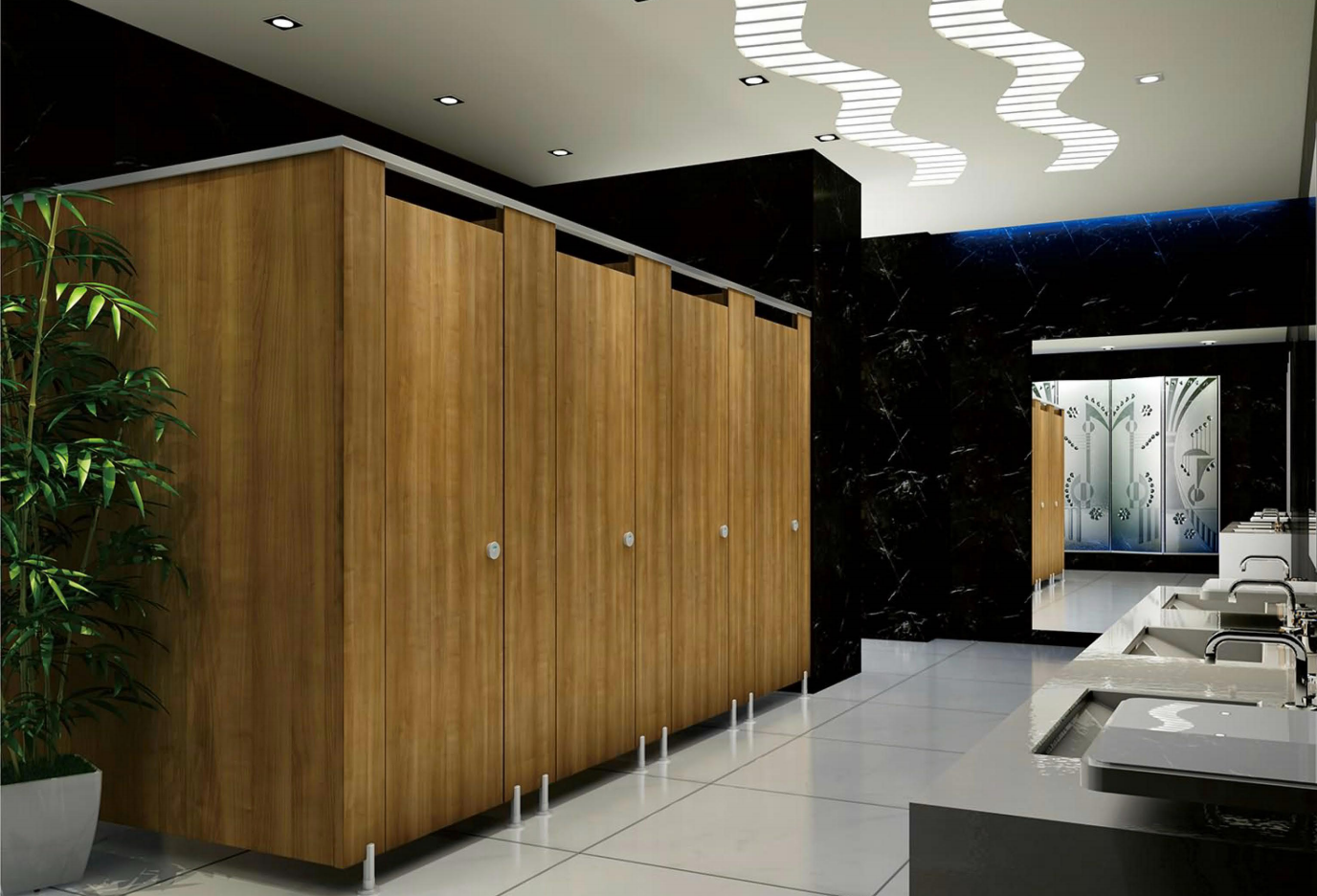


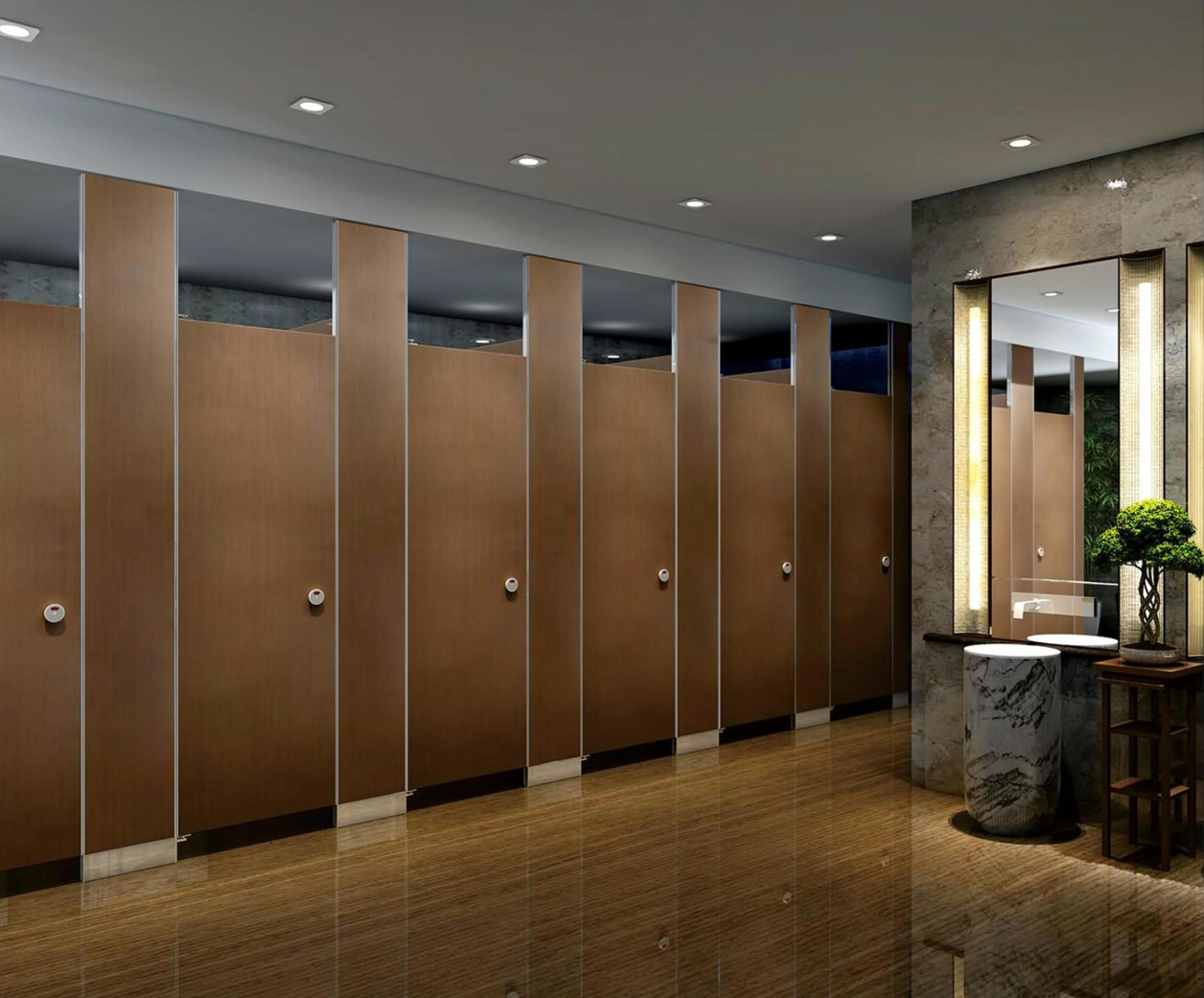
When designing or renovating a commercial washroom, selecting the right toilet partition material is one of the most critical decisions you will make. The material you choose directly impacts the durability, maintenance costs, and aesthetic appeal of the facility.
With so many options on the market, it can be overwhelming. In this guide, the SMG engineering team breaks down the three most common materials—HPL, MDF, and Phenolic Core—to help you make an informed decision for your next project.
1. High-Pressure Laminate (HPL) Panels
HPL is the industry standard for high-traffic commercial restrooms. It is created by fusing multiple layers of kraft paper with melamine resin under high heat and pressure.
- Best for: Schools, airports, stadiums, shopping malls, and office buildings.
- Pros: Extremely durable, moisture-resistant, scratch-resistant, and available in hundreds of colors and woodgrain textures.
- Cons: Slightly higher upfront cost compared to MDF, though the long-term ROI is excellent.
2. MDF (Medium Density Fiberboard) Panels
MDF is made from wood fibers combined with resin and wax, formed into panels under high temperature and pressure. It is usually finished with a melamine laminate or veneer.
- Best for: Boutique offices, low-traffic private facilities, or dry areas.
- Pros: Very budget-friendly, smooth surface, and easy to customize.
- Cons: Highly susceptible to moisture damage if not properly sealed. Not recommended for heavy-duty public washrooms or areas prone to high humidity.
3. Phenolic Core Panels (Solid Phenolic)
Phenolic panels are the premium choice. They consist of a solid black phenolic resin core with decorative surface layers, fused into a single, incredibly dense panel.
- Best for: Extreme environments, heavy-duty industrial facilities, and luxury commercial spaces.
- Pros: Virtually 100% waterproof (even the core is waterproof), highly impact-resistant, and features a sleek, modern appearance with minimal edge trimming.
- Cons: The highest upfront cost among the three options.
Quick Comparison Table
| Material | Moisture Resistance | Impact Resistance | Best Use Case | Cost |
|---|---|---|---|---|
| HPL | High | High | High-traffic public restrooms | Medium |
| MDF | Low | Medium | Low-traffic / Dry areas | Low |
| Phenolic | 100% Waterproof | Extreme | Stadiums, Airports, Heavy-duty | High |
Conclusion
Choosing the right toilet partition material ultimately comes down to your budget, the expected traffic volume, and the specific environment. For most commercial applications, HPL panels offer the best balance of durability and cost. For extreme wet environments, Phenolic core is the ultimate investment.